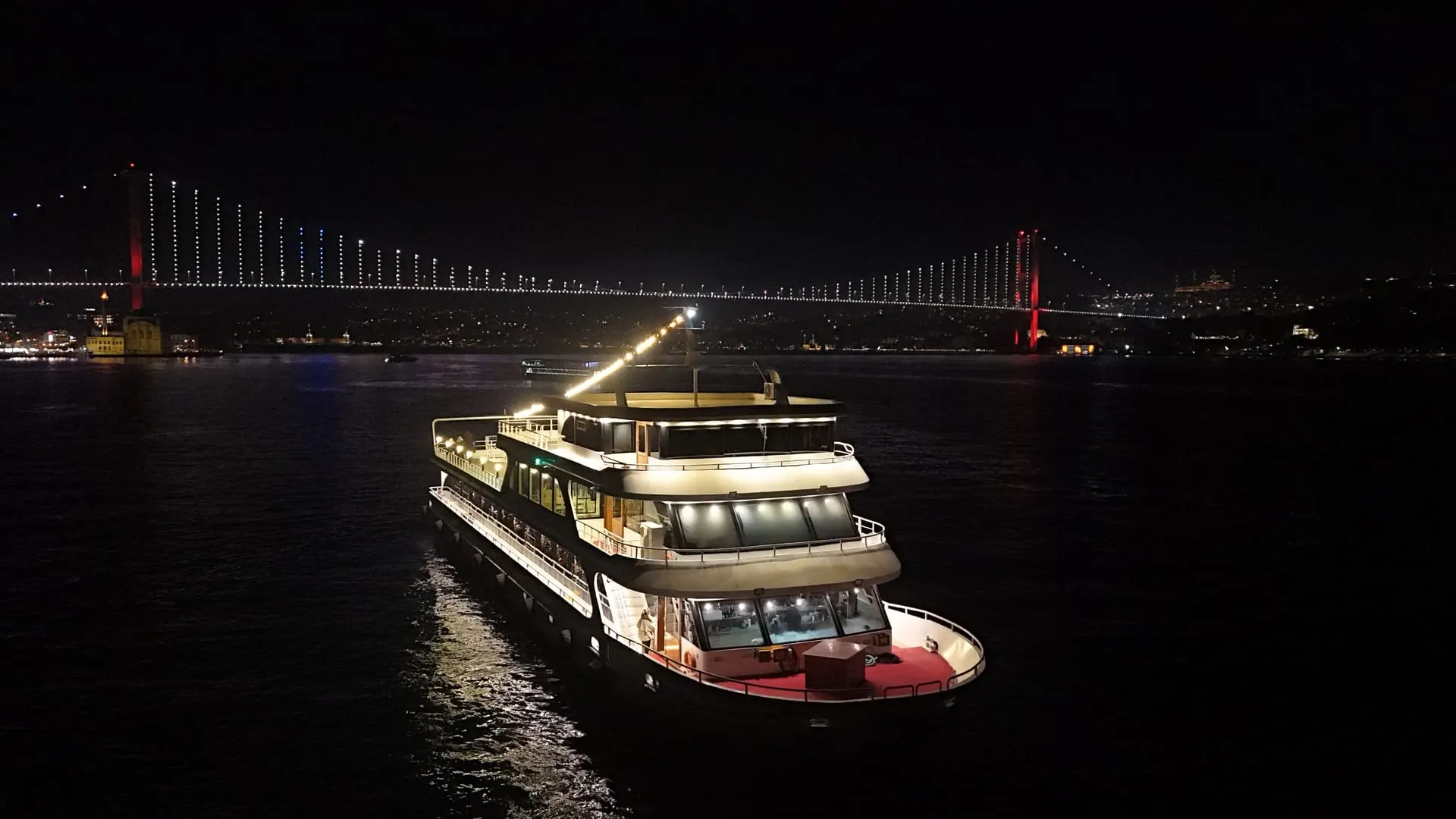
Most three-day itineraries for Istanbul try to do too much. They turn the trip into a list, and the city into a series of stops between Ubers. The plan below moves the other way — one morning for one part of the city, one afternoon to walk it slowly, and an evening that belongs to the table. The arc ends, as it should, on the water: a Bosphorus dinner cruise that gathers the palaces and bridges you've spent the previous days approaching by foot, and reads them back to you from the strait.
Why three days is the right length
A weekend in Istanbul is a missed opportunity. Two days is enough to see the headline monuments and miss the city around them — the courtyards, the ferries, the long lunches that explain why people who live here never quite leave. Three days adds the missing afternoon. It lets you give Hagia Sophia and the Blue Mosque the morning they deserve, then walk away from them; it puts the Bosphorus on its own evening, rather than tucking it between sightseeing slots; and it leaves one slow day in the middle to follow whichever thread the city has already offered you.
Beyond three days the trip changes character — you start adding the Asian shore at full depth, a hammam afternoon, a ferry to Büyükada. But the three-day version is complete in itself. It works as a long weekend, as the front half of a longer European trip, or as a re-acquaintance for travellers who have been here before and want to do it properly this time.
Day one — The Old City
The historic peninsula is dense. Plan to be on your feet by half past eight and to be done by mid-afternoon. Trying to push later costs you the light and the patience for what comes next.
Morning — the three monuments
Begin at Hagia Sophia at opening. The crowds build sharply after ten, and the upper gallery — quieter, with the better view of the dome — rewards an early arrival. Cross Sultanahmet Square to the Blue Mosque next; the visiting hours work around prayer times, so check the day's schedule the night before. From there, the entrance to the Basilica Cistern is a five-minute walk. Underground, cool, and unhurried — it makes a good pause before lunch.
Lunch and the palace
Eat in Sultanahmet rather than fight your way out for a meal. Matbah at the Ottoman Hotel Imperial does refined Ottoman court cuisine in a small dining room; Deraliye is a faithful alternative. Either feeds you in an hour without theatre. Afterwards, give Topkapı Palace the rest of the afternoon — the Harem ticket is a separate add-on and worth the additional fee, the Imperial Treasury rooms are not to be skipped, and the terrace at the far end of the second courtyard frames the Bosphorus opening into the Marmara.
Late afternoon and sunset
If energy remains, walk to the Grand Bazaar for an hour — not to shop, particularly, but to feel the scale of it. Otherwise climb back up to a Sultanahmet rooftop bar for the call to prayer at dusk. Seven Hills Restaurant's terrace and the rooftop of the Adamar Hotel both give you Hagia Sophia on one side and the Blue Mosque on the other, with the Sea of Marmara behind. An early dinner here, then bed — tomorrow is longer.
Day two — The European bank and a ferry to Asia
Day two takes you out of the postcards. The European shore north of the Golden Horn is where the city stopped being Ottoman and started being modern — late nineteenth-century apartment blocks, embassies turned consulates, the cafés that fed the Pera writers. The ferry to the Asian shore in the afternoon is the small adjustment that turns a sightseeing day into a feeling for the geography.
Morning — Dolmabahçe
Start at Dolmabahçe Palace. The first session is at nine; arriving before ten keeps the guided tour of the Selamlık unhurried. The ballroom and its crystal chandelier are the obvious set pieces. Less obvious, and worth lingering for, is the clock-room where Atatürk's death is marked — every clock in the palace stopped at 9:05.
Late morning — Galata and İstiklal
From Dolmabahçe take a taxi or the tram up to Galata Tower. The lift queue moves; the view from the top is the cleanest 360 of the historic peninsula and the Bosphorus mouth you'll get all trip. Walk down through the Galata neighbourhood and onto İstiklal Caddesi. The street rewards a slow walk — the Çiçek Pasajı arcade, the fish market alleys behind it, the Greek and Armenian churches set back from the road.
Lunch in Karaköy, ferry to the Asian shore
Drop down to Karaköy for lunch — Karaköy Lokantası for traditional, Lokanta Maya for modern, both reliable. From the Karaköy or Eminönü pier the ferries to Üsküdar and Kadıköy leave every twenty minutes. Twenty minutes on the water, a coffee on the other side, an hour's walk along the Üsküdar shore looking back at the European skyline. Return on the late afternoon ferry.
Evening — Cihangir or Beşiktaş
Dinner closer to where you're sleeping. Cihangir for small, neighbourhoodly rooms — Cuma, Journey. Beşiktaş for something more grown-up — the seafood meyhanes in the back streets behind the market. Either way, an earlier night than feels natural; tomorrow's centrepiece runs late.
Do not try to do Dolmabahçe and Topkapı in the same day. They are roughly the same size, the same density of detail, and both demand attention. Splitting them across day one and day two is what makes the three-day plan readable rather than exhausting.
Day three — A slower day, ending on the water
The third day is the one travellers tend to over-plan. Resist. The morning is for the part of the city you haven't yet walked; the afternoon is for resting; the evening is for the cruise.
Morning — the Bosphorus shore
Walk the Çırağan and Ortaköy waterfront, or take the funicular up to Bebek and stroll the promenade. The morning light on the strait is the photographer's preferred hour, and the cafés along this stretch — Mangerie, Lucca, the rooftop terrace at the W — are made for a long breakfast. Stop at Ortaköy Mosque at the water's edge; it photographs better in daylight than from the boat at night.
Afternoon — a hammam or the islands
If the season is right (May through October) and the morning ferries cooperate, the Princes' Islands are an easy half-day — Büyükada is the largest, no cars, lunch on a terrace, a horse-cart loop, the ferry back by five. If the islands feel like too much movement, choose the opposite: a long booking at Kılıç Ali Paşa Hammam or the Çemberlitaş Hamamı. Two hours, scrub, foam, rest. You will be the better for it that evening.
Evening — the Bosphorus dinner cruise
Doors open at the Eminönü pier at 20:00. The boat departs at 21:00 sharp and returns around midnight. Three hours, multi-course dinner, a programme of Anatolian music and dance, and the slow, lit pass of the strait — Karaköy, Dolmabahçe, Çırağan, Ortaköy Mosque, under the Bosphorus Bridge, up past Bebek and the Rumeli Fortress, turn at the second bridge, Beylerbeyi on the Asian shore, the Maiden's Tower at the mouth, back to Eminönü. The Standard package covers it; the VIP package adds premium meats, near-stage seating and a higher tier of service. Both can be booked with the Unlimited Alcohol Package and a hotel transfer add-on (+€10 per person).
Where to stay
The neighbourhood matters more than the star count. A few honest options.
Sultanahmet — for the morning monuments
The Four Seasons Sultanahmet (the former prison, now a quiet courtyard hotel) and the Ajwa Hotel are the two refined choices. The advantage is that you walk to Hagia Sophia in three minutes. The disadvantage is that the neighbourhood quiets early and the better dinners require a taxi.
Galata and Karaköy — for the evenings
The Pera Palace remains the considered classical choice — the lobby alone is worth the stay. The SOHO House Istanbul in the Palazzo Corpi suits travellers who want the members'-club register. The advantage is that you walk to dinner, drinks and the Karaköy ferry without effort.
Beşiktaş and the Bosphorus shore — for the water
The two heroes here are the Çırağan Palace Kempinski (an actual Ottoman palace, the only one you can sleep in) and the Four Seasons Bosphorus, half a kilometre upstream. Both put the strait outside the bedroom window. From either, the cruise pier at Eminönü is fifteen minutes by taxi.
The cruise that closes the trip
Pay on the boat, free cancellation up to two hours before departure, hotel transfer optional. Reserve the date now and finish the planning at your own pace.
Reserve Your Evening →Practical notes
- Istanbulkart. The single transit card that works on every tram, ferry, funicular and bus. Buy one at the airport machines on arrival; top up at any station. It saves time and money over individual tickets.
- Currency. Turkish lira. Most refined restaurants, hotels and the cruise itself accept euro and card without trouble; carry a small float of lira for taxis, the Bazaar and tipping.
- From the airport. Istanbul Airport (IST) is on the European side, an hour from the centre in light traffic. The hotel-transfer route is the simplest; the metro line and the HAVAIST coaches are good fallbacks. Sabiha Gökçen (SAW) is on the Asian side and adds time — only convenient if you are flying in via Pegasus or AnadoluJet.
- Language. English is widely spoken in the central districts, hotels and the cruise. A handful of Turkish phrases — merhaba, teşekkürler, afiyet olsun — go a long way at table.